

Shenzhen, the city with "no history"

Many people and many websites all say the same thing: the city of Shenzhen is not known for its history. Even when I asked one of the locals in Shenzhen, I was told "there is no history here." But, I don't think that's true at all.
My friends Ally, Tanner and I decided that since school was almost over, we would spend a couple of our free days going to visit the city of Shenzhen. The word Shen means "deep river" and the word Zhen means "ditch" or "drain between fields." We decided to visit Shenzhen for a couple of reasons: first, it's pretty close to Zhuhai and relatively easy to get to being only about an hour ferry ride away. Second, it's a city that is pretty accessible by foreigners because it borders with Hong Kong and was the first Special Economic Zone in China. As foreigners, we aren't able to take the train unless a Chinese resident buys our tickets for us, so visiting anywhere by train is much tougher than you might expect. So the ferry was the best option.
We left BNUZ fairly early on Sunday, so that we could spend the entire day there, and ended up arriving at the Shenzhen ferry terminal around 9:30am. We hadn't made any sort of plan or schedule, so we decided to hop on a "free shuttle" even though we had no idea where it was going to take us! Luckily, it ended up dropping us right off at a subway station, and from there we were able to make our way into the city centre. I'd never been on a subway in China before, but it was really easy to navigate. All the signs in the terminal are bilingual, so finding our way as pretty easy. We just put in our destination and received a token that let us in to the station and out the gate at wherever we were heading.
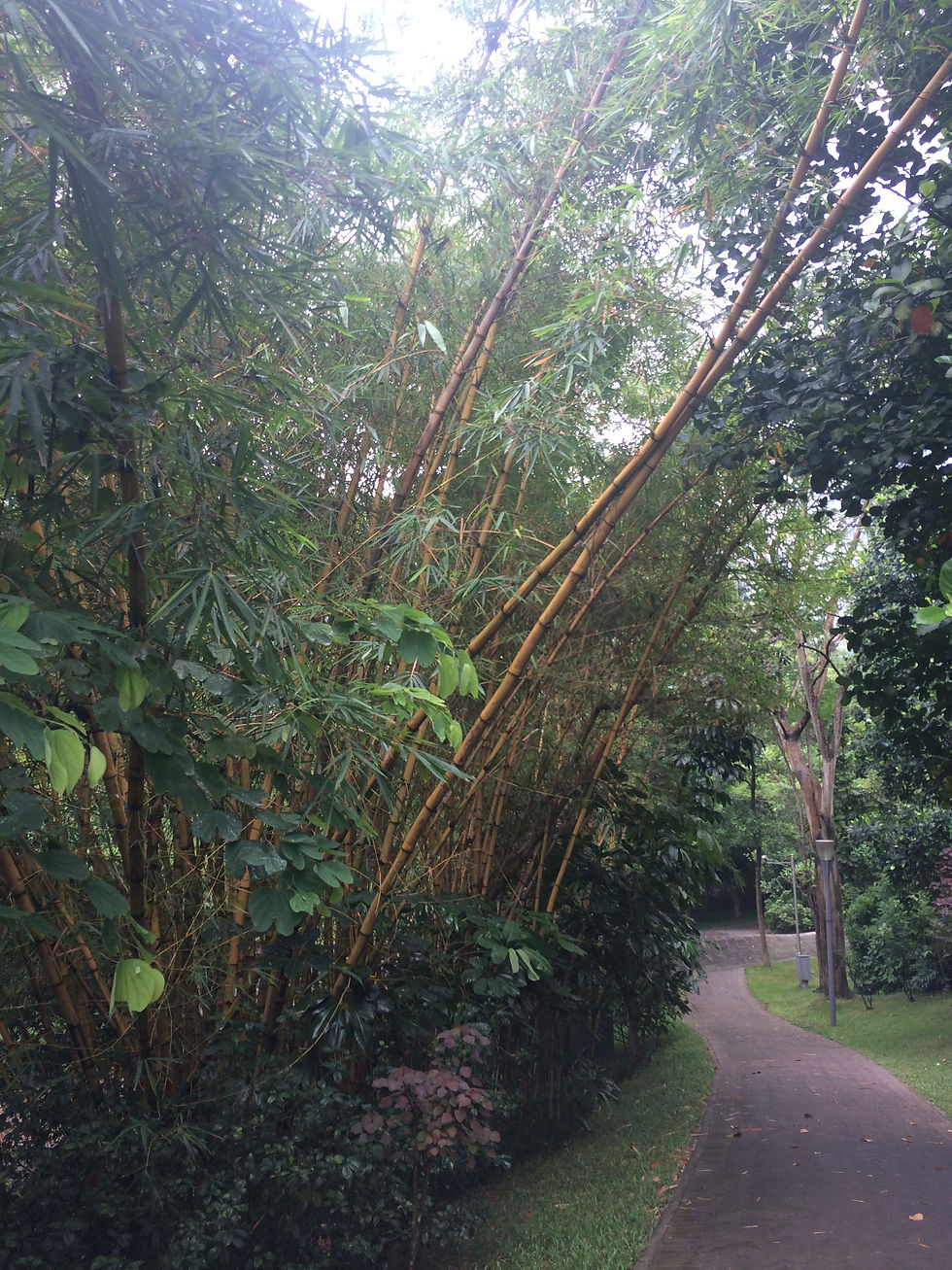
My first impression of Shenzhen was that it is gigantic. We got out of the subway station and all I could see were skyscrapers. The most notable was the Ping An Finance Centre, which was just completed this year. I believe it is the tallest building in China, and the fourth tallest building in the world. I believe it is about 115 storeys tall. We wandered around the city for a bit just trying to take it all in. We found a beautiful forest park right in the middle of downtown, and took a detour there before heading to the Shenzhen museum. I had no knowledge of Shenzhen before arriving, and I found the museum really interesting because it helped me situate myself in the city. As I mentioned, Shenzhen is not as rich in history as, say, Beijing or Shanghai, because it didn't rally start to grow until about 30 years ago. This growth began when China opened its doors up to foreign trade, and as people began to move to Shenzhen for business, development of the city really began. So, as a "modern city" it's true, Shenzhen does not have that much history. But as an important area within China, there have been communities in the Shenzhen area for centuries.

There have been people living in the Shenzhen area for over 7000 years. It was originally settled by fishing families and farmers, who lived in small tribes or communities around the area. In about 500AD, the original silk road was started, which facilitated trade between China and other countries. At this time, the ocean became the main way to send out a receive goods from countries like India, and so Shenzhen became one of the main starting points for ocean travel and trade. However, as time went on, foreign countries (especially Japan and Europe) wanted to start to colonize China, and at this point (1300 AD), Shenzhen became a important town for coastal defence. However, even though the area was fairly important for trade and defence, Shenzhen did not really begin to grow until much later.
Another important aspect of historical development that took place in the Shenzhen area was the development of the Hakka culture and people. This is especially interesting to me because my Chinese heritage comes from the Hakka peoples of the Guangdong province. During the era of the dynasties in China, the emperors always wanted to rule the north and north-eastern areas of the country. The reason for this was to protect the country from invasions and attacks from countries to the north. The Great Wall was built for this reason. The logic behind protecting the north comes from the fact that it is the only side of China that didn't have a "natural barrier." China's south is extremely hot and not many armies could handle the tropical forests, heat and disease (malaria). The east is guarded by the ocean and the west is very desert-like. So, that's why protecting the north was always the priority of emperors and dynasties.
However, in the north, there was often war, famine and general uncertainty. This caused many people to migrate away from the northern cities, to settle in the south. Throughout Chinese history, there have been several large migrations to the south in order to escape the war and famines. One of these major migrations occurred between 300-1200AD, and as the people from the north mixed with the native people of the south, the Hakka culture began to develop. Today, there are still many Hakka people living in the areas around Shenzhen, and the Hakka dialect is still recognized as one of seven regional dialects in China.

After visiting the city for a while, Ally, Tanner and I headed to a hostel for the night. I'll add some pictures, but as my first "real" hostel experience, I don't really have any complaints! The hostel was a little bit out of the downtown core, but by no means was it outside of the city. There were tons of shops, malls and restaurants all around the hostel, and it was really busy.
We headed out the next day around 10:30, and back down to the city centre. It was really cheap and efficient to get around by subway, it very busy. Since it was a Monday morning, there were a ton of commuters heading in to work. We decided to head to the "pedestrian mall" which was about 30 minutes away from the hostel. Since becoming a Special Economic Zone, Shenzhen has really flourished. As I understand, Shenzhen was originally a kind of "experiment" because when China decided to open their doors to foreign trade, nobody knew how it would go, but Shenzhen absolutely exploded. Today, it is primarily known as a "shopping city" and lots of residents come from Hong Kong to shop and browse. As someone who knew nothing about Shenzhen, one thing I noticed was the amount of malls and shops everywhere. Pretty much every block has its own mall, and one mall we were in even had a full-sized skating rink! The pedestrian mall is a huge neighbourhood of street vendors, small shops and huge malls, and we had a pretty fun time wandering around and checking them all out.
We headed back to the BNUZ around 4:00pm, had dinner and fell right to sleep! It was a busy couple of days, but it made all of us more confident. All three of us will be travelling alone after the program ends. Ally and Tanner are heading to Macau and Hong Kong, and I'm heading to Shanghai, so I think we were all relieved to know that we could travel without the help of our language partners or Chinese-speaking friends.
I hope you enjoyed this post! I know a lot of you enjoyed my post about Sun Yet Sen, and the history of China, so I tried to incorporate more history into this post as well. :) Thanks for reading!!


Comments